
Place
Lambak clan
Ethnic group that lived on a remote Fire Island, later known as "Lambak Island"
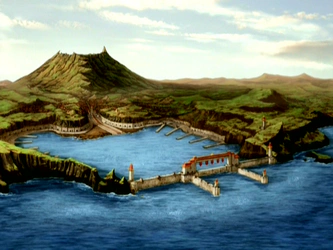
The Lambak clan was an ethnic group that lived on a remote Fire Island, later known as "Lambak Island". Living for thousands of years in self-isolation due to a profound distrust of outsiders, the clan maintained a unique culture and included benders of all elements. The clan's independence ended as a result of the Lambak Island conflict in 66 BG, with the Lambak people accepting the overlordship of the Fire Nation in return for autonomy.
Yet the clan's way of life was gradually undermined in the next years until tensions resulted in a revolt by the clan's people in 63 BG. This attempted secession was suppressed by the Fire Nation military on Prince Sozin's orders; the Lambak clan was destroyed during the brutal punitive campaign.
Development and early conflicts
The Lambak clan was an ancient group of people dating back to the time before the formation of the four nations. The clan members traditionally lived on a remote Fire Island which had remained independent after the Fire Nation's unification. As a result of its isolation and insignificance, the island and its inhabitants were largely forgotten around the world.
Lambak lore claimed that their home island was once settled by five different clans, including the Lambak, the Baybayin and Ibalon. The five clans split the island among themselves, and their respective chiefs reportedly worked with each other on equal terms. Yet four clans were gradually wiped out over millennia, with the Lambak people claiming that outside invaders were responsible for these massacres. However, the clan lore was not consistent regarding the identity and fate of other clans, and it was suspected that some retellings of the events may had been fabricated. Skeptics even speculated that at least some of the clans may had wiped each other out or that the Lambak clan had destroyed other communities over rivalries, later blaming outsiders for the events. Either way, the Lambak people were eventually the sole surviving ethnic group on the island.
Near-destruction and self-isolation
At one point, the Lambak clan was beset by an army of earthbenders, either belonging to foreign invaders or rival clans. Driven near destruction, the Lambak people sought refuge in a cave system inside their island's mountains, where they discovered a great spirit power during an autumnal equinox. Dubbing it "Yungib", the Lambak clan harnessed the spirit power to greatly enhance their benders' powers and defeat their enemies. This event was subsequently remembered as the "Awakening of Yungib", and the clan subsequently began to pray to "Yungib".
Afterward, the clan's waterbenders used the spirit powers to create a perpetual fog around the entire island, further isolating their home from the outside world. The Lambak people also organized a group of skilled warriors called scouts to hunt and kill any foreigners who landed on their shores, reinforcing their self-isolation. This system largely worked and the clan remained independent for thousands of years, though at least some adventurers seemingly visited the island and escaped to tell their stories, possibly including a writer allegedly named Ashō.
Loss of independence
In 66 BG, the clan's scouts Malaya and Amihan noticed a new group of foreign intruders on their island, namely a small expedition of the Western Kingdom Trading Company. Chief Ulo initially ordered their observation, and eventually demanded that the scouts kill them. Disagreeing with this order, Malaya went rogue in an effort to save the foreigners. Meanwhile, Avatar Roku and his companion Gyatso had also ventured to the island on a separate quest for Prince Sozin of the Fire Nation, with Roku stumbling upon the Lambak waterbenders inside the cave system. In the ensuing duel, Roku knocked out himself and the waterbenders, thereby accidentally dispersing the protective fog. The Avatar was captured by the clan, with Ulo subsequently treating Roku as a respected guest. Seeing a growing number of intruders on his home's shores, Ulo resolved to reinforce his clan's independence. To do so, he intended to lure the Avatar into the Sacred Cave of "Yungib" and sacrifice Roku in order to gain new powers to defend the clan, while ordering Amihan and some other clan warriors to capture the Western Kingdom Trading Company members well as set up an ambush for Malaya and Gyatso.
Ulo's plan ultimately failed, as Malaya and Gyatso defeated the Lambak warriors, freeing the company members who subsequently destroyed much of the clan's village in an act of revenge. Furthermore, Roku realized Ulo's ulterior motives in the caves and dueled him. As this was happening, Sozin's team also arrived on the island to aid the Avatar, fearing that his life was in danger. Sozin ventured into the caves and became involved in the duel between the chief and Roku, resulting in Ulo's death, the cave's destruction, and the dispersing of the power of "Yungib".
After these great changes, the remaining Lambak people chose Baku as their new chief and made peace with the foreigners, factually accepting that they could not remain independent due to loss of "Yungib". Acting on his experiences and in memory of Malaya –who had been killed during the conflict– Roku subsequently demanded that Sozin ensured the autonomy of the Lambak clan. To maintain his friendship with the Avatar, the prince reluctantly agreed and pressured his father Fire Lord Taiso into turning the clan's island, renamed "Lambak Island", into a self-governing "special region" of the Fire Nation. The locals were allowed to choose their own leadership and had to pay no taxes.
However, Sozin subsequently exploited the clan's special status by turning Lambak Island into his private fiefdom. In cooperation with the Lambak clan, he organized a secretive mining and weapons research operation under Dalisay to exploit the island's special, spirit-infused metals. As part of these efforts, Sozin forced the clan to accept the construction of a naval base and a permanent military presence; this intrusion into their life ultimately led to growing resentment by the clan's people.
Rebellion and destruction
The Lambak clan grew increasingly resentful over the Fire Nation's presence on their island, resulting in a political radicalization. In 63 BG, the tensions boiled over and the moderate chief, Baku, was deposed in favor of Amihan. Under their new leader, the clan's people launched a surprise attack on the military base and the warships at their island, sinking the fleet, burning the base, and taking over one hundred hostages. Amihan subsequently sent a letter to the Fire Nation Capital, declaring the independence of Lambak Island and threatening to execute the hostages unless this declaration was honored.
Exploiting the absence of Fire Lord Taiso from the capital at the time, Sozin ordered the military to reconquer Lambak Island, crush any resistance, and resume mining operations. When the Fire Nation military attacked, the clan acted on its threats and executed the hostages. The natives subsequently waged a guerrilla campaign from the jungles against the invaders, with the Fire Nationals being surprised by the extent of the resistance. However, the military gradually "hunt[ed] down" the islanders and managed to secure the island for Sozin.
Government and beliefs
The Lambak clan was traditionally organized as a chiefdom, with the chief possessing great powers and being responsible for "communicating" with "Yungib" during the autumnal equinox. The clan worshiped "Yungib" as its savior, offering regular sacrifices to the spirit and viewing its self-isolation as a mandate of the holy figure.
By the time of Ulo's reign, the position of chief essentially transformed into a dictatorship. Ulo violently punished and quashed dissent to his policies, relied on informants to identify critics, and used propaganda to encourage xenophobic hatred as well as fear among his people. Most clan members supported his policies and ideology, encouraging unquestioning obedience to the chief as an extension of the will of "Yungib".
Culture
By the era of Roku, the Lambak clan had a sophisticated culture with many traditions and passed-down skills. In general, the clan was well versed in the optimal use of their island, including its animals and plants. Some clan members knew how to study their island's fog and the stars to track the seasons and the weather. The clan included farmers who worked the terraced fields, hunters who tracked the local wildlife, fishers who mainly worked at the island's rivers, gatherers who were skilled in extracting poisons and curative substances from plants and animals, weavers who worked plant fibers into clothing, smiths skilled in metalworking, and the scouts who protected the clan. Officially, the scouts were just responsible for constantly checking the island's wilderness for foreign intruders. In doing so, they largely lived alone outside the clan's village, using survivalist skills to be self-reliant and only returning to the settlement every few weeks to report to the chief, restock some provisions and make some repairs of their equipment.
The clan traditionally consisted of nonbenders, waterbenders, firebenders, earthbenders and airbenders. The benders were sometimes deployed in specialist roles to benefit the clan: The waterbenders acted as healers and were responsible for using the bending-enhancing effect of the Sacred Cave of Yungib to create a fog which perpetually covered the island and discouraged outsiders. The earthebenders sought out ores for metalworking and shaped the island's coasts to make them more defensible. The firebenders used their powers for smithing, using the local special metals to create weaponry.
Clan women traditionally wore red-black-golden tolgè skirts and clan men wanoh loincloths as well as bayyaung blankets, types of fashion which had been common on the Fire Islands before the Fire Nation's foundation. The clan members recorded their history through elaborate cave paintings.
The clan traditionally cremated their dead in a solemn ritual before celebrating them with a night of feasting, dancing, and storytelling.
Cuisine
The clan mainly farmed and consumed rice, supplemented with gathered fruits, fungi, and vegetables, venison, fish, and the produce of a small number of livestock, mainly hybrid pigs.
Settlement
By 66 BG, the Lambak clan largely lived in a single village in a terraced valley. It consisted of nipa huts built on stilts with thatched roofs. The village included a smithy run by Baku. The houses' interior was decorated with shells, animal bones, and weapons.
Sources
Adapted from the original article, under CC BY-SA 3.0.