Lore
Philosophy in the World of Avatar
Philosophy refers to the ethical frameworks, cultural beliefs, and metaphysical…
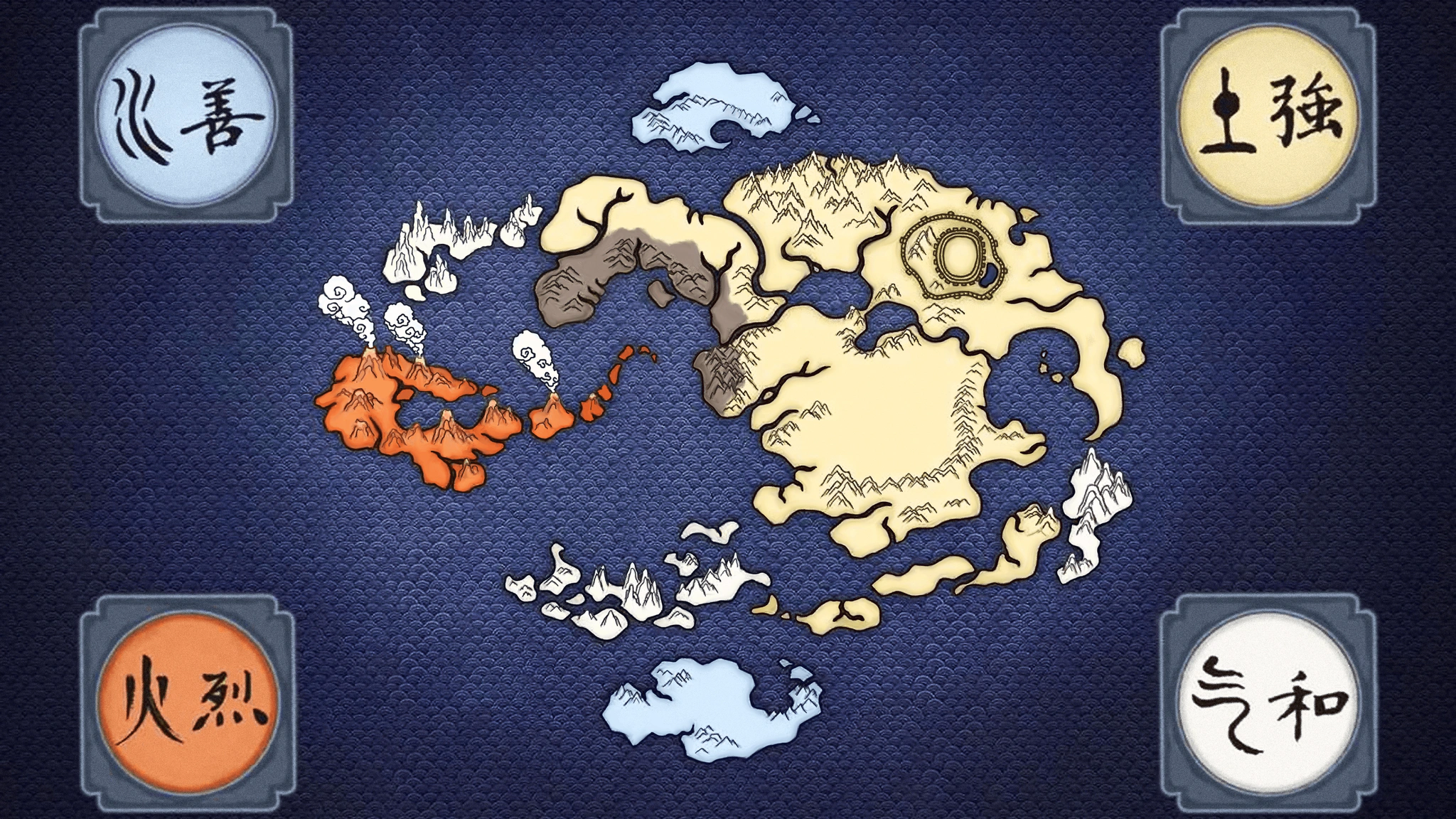
Philosophy refers to the ethical frameworks, cultural beliefs, and metaphysical principles that influence the worldviews of the four nations. These traditions frequently overlap with spiritual beliefs, yet they exert a separate, direct influence on individual conduct, governance structures, and the broader understanding of balance. The moral foundation of the world is defined by recurrent themes like harmony, duty, honor, change, and interconnectedness that are present in all cultures. Because bending is not only a physical skill but an extension of personal and cultural identity, each element embodies a distinct philosophical framework.
Air Nomads
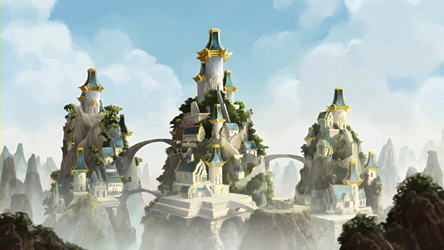
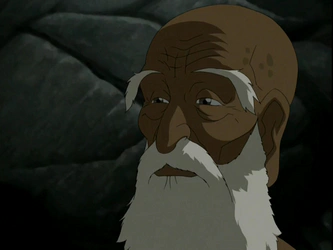
Detachment, pacifism, and spiritual enlightenment were the foundations of Air Nomad philosophy. Their teachings placed a strong emphasis on letting go of worldly attachments and concerns in order to achieve inner freedom. Though not an airbender, Guru Pathik was their spiritual brother, and he illustrated this principle through the release of emotional bonds in order to unlock greater awareness. In some cases, an internal focus on material matters such as wealth could gradually erode and weaken a person's airbending. While this focus on detachment was not always a synonym of indifference, but rather of freedom from ego and possessiveness, during the era of Kyoshi, exile was the fate of many young Air Nomads who turned from their pacifist values. Sometimes even those who abstained from violence could be considered "renegade" if they indulged in "worldly" affairs. Even when thriving towns near the temples struggled with banditry, many Air Nomads did not help unless directly asked for aid, having been burned by interfering with others' lives. Monk Namthöse of the Northern Council of Elders tried to instate a rule to allow only Air Nomads to visit the Northern Air Temple, and actively discouraged young Air Nomads from absorbing outside news, for fear that they would become distracted from their paths. However, by the early era of Roku, the Air Nomads had abandoned the isolationism of their previous era. They did their best to keep peace on an international scale, by lending aid to the other nations when requested, or to the Avatar himself.

In response to the Air Nomads embracing the other three nations, a renegade order known as the Guiding Wind arose, led by the popular philosopher Khandro. The Guiding Wind argued that the Air Nomads' new relationship with the nobility and wealthy elite of the other nations had impeded the spiritual growth of people across all nations. This sparked a great internal debate among the Air Nomads on whether to turn inward or to help the rest of the world, and part of the tension was about whether the Air Nomads should embrace those that had a lot of worldly prosperity, or reject them altogether, as working with other nations meant also working with those unwilling to cede power or wealth. The Air Nomads' philosophy and teachings became influential across the other nations, mostly due to the support of the Fire Nation nobility. Such a relationship culminated in the Fire & Air Center of Learning opening in the Fire Nation, where Air Nomad teachings could be learned by Fire Nation citizens.
The sanctity of life was also at the heart of Air Nomad ethics. Because of their respect and reverence for living things, many Air Nomads adhered to vegetarianism. Due to this philosophy of peace, the Air Nomads did not have a formal military, which, in conjunction with the power lent to Fire Lord Sozin's armies by the comet, was a contributing factor in their near extinction.
As air is defined as the element of freedom, airbending techniques reflect this mindset: avoidance and evasion over confrontation. This accounts for airbending's emphasis on defensive maneuvers and its perceived lack of fatal finishing attacks. Even advanced abilities such as flight are tied to total detachment from earthly tethers. The ultimate expression of this principle is found in the teachings of Guru Laghima, who wrote that "new growth cannot exist without first the destruction of the old". These teachings later influenced Zaheer, whose interpretation of Air Nomad philosophy diverged radically from its traditional pacifist framework.
This original philosophy strongly influenced Avatar Aang, who repeatedly sought pacific resolutions and resisted to kill his enemies. His refusal to end Fire Lord Ozai's life, despite advice from allies and past Avatars, reflected his commitment to Air Nomad doctrine. For Aang, preserving life was inseparable from restoring harmony.

Air Nomad society was structured around monastic communities dedicated to meditation, introspection, and moral discipline, in contrast to the more politically structured cultures of the other nations. However, humor and lightness also played an integral role in Air Nomad thought. Rather than approaching spirituality with rigidity, monks such as Gyatso demonstrated that wisdom could coexist with playfulness. This approach reinforced the idea that enlightenment was not achieved through austerity alone, but through balance and emotional openness.
Following Harmonic Convergence, Air Nomad philosophy experienced a revival through the formation of the new Air Nation. Although many of the newly awakened airbenders did not grow up within traditional monastic structures, Tenzin and his children worked to transmit the core principles of the Air Nomads. The reconstruction of the air temples and the restoration of Air Nomad customs were not only cultural acts, but philosophical ones. The Air Nation gradually embraced its historic mission of aiding others across the world, reaffirming the Air Nomads' ethical and spiritual ideals.
Water Tribe
As water is defined as the element of change, the core ideas of Water Tribe philosophy are flexibility and group interdependence. Their worldview, which is based on the behavior of water itself and is impacted by the tides and the moon's cyclical rhythms, stresses adaptability in the face of adversity and the ability to persevere through change. This elemental principle goes beyond bending technique into cultural ethics, promoting adaptability rather than rigidity.

Community and kinship are fundamental values in Water Tribe culture. Leadership structures, whether in the Northern Water Tribe's formal hierarchy or the Southern Water Tribe's more decentralized organization, emphasize collective survival over individual ambition. Water Tribe philosophy views identity as relational rather than solitary; one's role is significant because it sustains the group. This philosophy is also expressed through ceremonial honors such as the Mark of the Brave, awarded for inspirational displays of courage, the Mark of the Trusted, bestowed upon those who prove worthy of the tribe's confidence, and the Mark of the Wise, granted for sound judgment and leadership under pressure. These marks are symbolic affirmations that courage, reliability, and wisdom exist in service of communal survival, and demonstrate that leadership is inseparable from responsibility to others.
This emphasis on communal responsibility is also reflected in the training of waterbenders, who often learn within familial or tribal contexts. The tribes are built on close-knit communities of friends and families who will do whatever it takes to protect their people from those that would do them harm, whether invaders or natural predators. Because of this love and respect for their people, the waterbenders see it as their sacred duty to use the natural abilities available to them to defend their homeland and all who need their protection. Water Tribe leadership philosophy also blends strength with compassion, particularly visible in figures such as Chiefs Arnook, Hakoda, and Tonraq.

In the Foggy Swamp Tribe, philosophical understanding manifests through the belief that all living organisms are interconnected and reliant on each other, based on their understanding of the sacred banyan-grove tree.
Waterbending techniques mirror this ethical framework through its fluidity and adaptability. Rather than confronting force directly, waterbenders redirect energy, transforming an opponent's aggression into vulnerability. Healing, a specialized waterbending practice, further reflects the element's association with preservation and restoration.
Earth Kingdom
Earth Kingdom philosophy values endurance, stability, and perseverance. Much like earth itself, its guiding principle is to remain steadfast in the face of adversity. This mindset encourages patience and resolve rather than rapid change, favoring gradual strength over impulsive action.

However, philosophical diversity exists within the vast kingdom. Ba Sing Se historically emphasized rigid order, hierarchy, and social control, reinforcing the belief that stability must be preserved at all costs. In contrast, rural provinces and independent cities often reflected more pragmatic interpretations of strength particularly during the Hundred Year War, where adaptability coexisted with tradition, and survival required flexibility in the face of wartime disruption.
As earth is defined as the element of substance, earthbending itself mirrors these principles. Progress frequently requires standing one's ground and confronting challenges directly rather than evading them. Utilizing neutral jing, earthbenders are taught to wait and listen for the right moment to strike and, when that moment comes, act decisively. In other words, earthbenders generally endure their enemies' attacks until the right opportunity to counterattack reveals itself. This approach reinforces the philosophical idea that true strength comes from patience and resolve.

At the same time, Earth Kingdom philosophy acknowledges that excessive rigidity can become stagnation. The cultural emphasis on order and permanence has, at times, fostered corruption or resistance to reform, particularly within centralized institutions like Ba Sing Se. Later political movements, including calls for modernization and the dissolution of monarchic rule, revealed internal tensions between tradition and transformation.
The reverence for legacy also characterizes Earth Kingdom philosophy. The enduring respect for figures such as Avatar Kyoshi reflects a cultural belief that decisive action, when taken to preserve order, is justified. Unlike the Air Nomads' emphasis on detachment, the Earth Kingdom people often frame responsibility and respect as rooted in land, ancestry, and continuity. In general, Earth Kingdom culture is concerned with maintaining face: a person's good reputation and standing in the eyes of others.
Fire Nation
Fire Nation philosophy traditionally centers on ambition, transformation, and the pursuit of greatness. Fire is defined as the element of power, consisting of overpowering force tempered by the unflinching will to accomplish tasks and desires, reflecting the nature of fire itself, which is ever striving to expand and grow wherever it finds fuel. Furthermore, fire is understood as a source of life and energy, symbolizing vitality, warmth, and renewal. In its earliest form, firebending was described as an extension of breath and inner drive, rooted in the sun's sustaining power rather than destruction. However, during the era of imperial expansion, this philosophy was distorted into an ideology of supremacy, equating strength with conquest and dominance; while firebending was twisted into being fueled by rage, hatred, and anger. Ambition, once a call toward self-improvement, became a justification for war.

The Fire Nation's worldview upholds that only unity, centralism, and strict order can ensure stability and prosperity. This does not include restricting freedom and creativity, as these aspects of personal expression are critical to societal development and harmony; however, children do not gain this freedom until they have been taught how to improve the Fire Nation with their actions, and the honor it brings them. These ideas are instilled from an early age. Nevertheless, this original view was corrupted during the Hundred Year War in order to fit the Fire Lords' ambitions. The idea of a peaceful, harmonious, and cooperative world order was changed into an imperialist ideology that propagated global domination and striving to achieve it. Children were taught that the Fire Nation was the greatest civilization that had ever existed, and that the war was its way of sharing its greatness.
Central to Fire Nation thought is the concept of honor. Honor functions both as a social expectation and as a deeply personal moral measure. Within the imperial structure, honor was often tied to obedience, military success, and loyalty to the Fire Lord. Yet for individuals such as Zuko, honor evolved into a personal philosophical struggle, detached from state approval and rooted instead in moral accountability and self-understanding.
The philosophy also emphasizes transformation. Unlike the endurance of earth or the adaptability of water, fire represents active change driven by internal will. Firebending requires emotional clarity and controlled intensity, as demonstrated in the discipline necessary for lightning generation, which demands separation of conflicting energies within oneself. This reflects a broader philosophical principle: power must be directed with precision, or it becomes destructive.

The Sun Warriors preserved an older interpretation of fire as creative rather than destructive, emphasizing harmony between power and life. Their teachings revealed that true firebending is fueled not by anger, but by life itself. This restoration of original philosophy reframed fire as a source of illumination and vitality, correcting the militarized distortion that had taken hold during the Hundred Year War.
In the post-war era, Fire Nation philosophy underwent significant recalibration. Fire Lord Zuko attempted to shift national identity away from expansionist ambition toward reconciliation and responsibility. This transition, however, did not abandon the element's emphasis on drive and progress, but redirected it toward internal reform rather than external conquest. The nation and its people began to work to redefine themselves away from the terrible crimes of their past, without losing their traditions, heritage, and thirst for innovation.
United Republic of Nations
As a multicultural society founded after the end of the Hundred Year War, the United Republic of Nations reflects pluralism and coexistence rather than a single philosophical doctrine. Unlike the other nations, which philosophies developed over centuries within relatively homogeneous cultural frameworks, the United Republic emerged as a deliberate political initiative. Its philosophical foundation therefore initially rested not on tradition alone, but on the ongoing balancing of different worldviews.

Debates over bending privilege and social equality exposed underlying tensions within this pluralistic structure. The rise of the Equalists challenged long-standing notions and attempted to reframe power as a structural imbalance. These disputes forced the republic to confront fundamental questions about justice, merit, and equality.
Industrialization and technological advancement further complicated these discussions, introducing new tensions between tradition and progress. Technological innovation enabled nonbenders to rival bending capabilities in areas such as transportation and combat. This shift destabilized older elemental hierarchies and reframed strength as something that could be engineered rather than inherited. Philosophically, modernization raised concerns about whether rapid advancement strengthened society or distanced it from spiritual and cultural roots.
The hunger for progress, to move forward, to change things and grow and leave the past behind, continues to provide new wonders and new problems. The leaders and people of the city hold the ultimate responsibility to balance this hunger with restraint, caution, and care, especially on behalf of those who cannot defend themselves from the wildest changes.

Ultimately, the United Republic's philosophy is defined by adaptation in an era of change. Rather than grounding itself in a single elemental identity, it embodies the idea that balance can be achieved through institutional reform, civic participation, and coexistence across difference. In contrast to the ancient doctrines of the four nations, the republic's guiding principle is not preservation of tradition, but the continual redefinition of what balance means in a modern world guided by technological advancement and constant reinvention for the future.
Republic City plays home to countless multicultural families. As families continue to blend their traditions and practices, their inherited identities continue to change. Many, especially second- or third-generation Republic City residents, have come to define themselves less by their ancestral homes and more by the United Republic itself. This shift reflects the republic's broader philosophical commitment to coexistence through mutual recognition and adaptation, where balance is achieved by allowing cultural boundaries to intersect and evolve within a unified political framework.
Avatar
Central to the world's philosophical structure is the concept of balance, embodied by the Avatar. Balance is understood not merely as neutrality, but as the active maintenance of harmony between nations, elements, and spirits. Different Avatars have interpreted balance in varying ways. Some favored diplomacy and restraint, such as Yangchen, who recognized that the Avatar's duty to the world sometimes required pragmatic compromise. Others, like Kyoshi, embraced decisive force when they believed it necessary to preserve order and protect the innocent. These differing interpretations demonstrate that balance is not a fixed doctrine, but a principle shaped by context and circumstance.

At the same time, the Avatar's philosophy often reflects the nation and the culture in which they were raised. While each Avatar inherits the same spiritual role, their personal upbringing influences how they understand justice and intervention. The ongoing dialogue between past and present Avatars illustrates that balance is not achieved through uniformity, but through the integration of multiple perspectives.
Guiding Wind
The Guiding Wind was a renegade group of Air Nomads and an international revolutionary movement that operated during the life of Avatar Roku. The group was founded on the belief that the Air Nomads had grown complacent in their search for enlightenment, and that they were seeking too much cooperation with the corrupt and exploitative wealthy citizens of other nations. The Guiding Wind sought to eliminate class differences across the world, replace traditional monarchic and oligarchic systems with democratic as well as egalitarian ones, and revitalize spiritual beliefs.
Laghima
Laghima was an Air Nomad guru and renowned poet who lived at the Northern Air Temple around 3,829 BG. He discovered the secret to weightlessness, which allowed him to unlock the airbending ability of flight. This essentially allowed Laghima to become untethered from the earth and live the last forty years of his life without ever touching the ground. His writings and philosophy were very influential and continued to be studied for thousands of years, including by Zaheer, the leader of the anarchist group known as the Red Lotus.

Order of the White Lotus
The Order of the White Lotus is an ancient and formerly secret society that transcends the boundaries of the four nations, seeking philosophy, beauty, and truth. The creed of the order is "The quest for truth above all else". Some order members have expressed an extreme devotion to this creed, believing that "the truth" had be shared regardless of its moral implications or consequences, even at the cost of lives.
Shoken
Shoken was a guru and philosopher who lived around 3,829 BG. Known for his controversial ideas, Shoken was much less popular than his philosophical rival Laghima during his lifetime and afterward. According to one interpretation of his transcribed statements, Shoken advocated that people should follow their own path unburdened by the morals or beliefs of society; by ignoring the opinions of others, it was possible to discover one's self and exist without compunction. The philosopher contrasted such freedom with the widespread tendency of people to seek approval and guidance of others; he described these tendencies by using an allegorical figure in his teachings, the so-called "Fettered Man". Shoken also posited that humans were only points of contact that did not truly exist until they interact with others and the world around them, a position considered similar to the Air Nomad idea of negation of the self. He wrote that a mind had to be destroyed in order to be possessed, which was considered similar to Laghima's "empty, and become wind".
Xai Bau
Xai Bau was a political philosopher who founded the Red Lotus. Originally a member of the Order of the White Lotus, Xai Bau grew disgusted with the society in the wake of the Hundred Year War's end, believing it had become mere lapdogs of the Avatar. Xai Bau traveled the world and shared his beliefs in total freedom with others. He eventually broke from the White Lotus entirely, creating the Red Lotus, which would be truly committed to changing the world.
Sources
Adapted from the original article, under CC BY-SA 3.0.